Weather's Role in Shaping Scoring Rates for Northern Division Fixtures: Observed Patterns and Practical Adjustments
Written by Greta Friedrich · Jul 31, 2026
Weather's Role in Shaping Scoring Rates for Northern Division Fixtures: Observed Patterns and Practical Adjustments
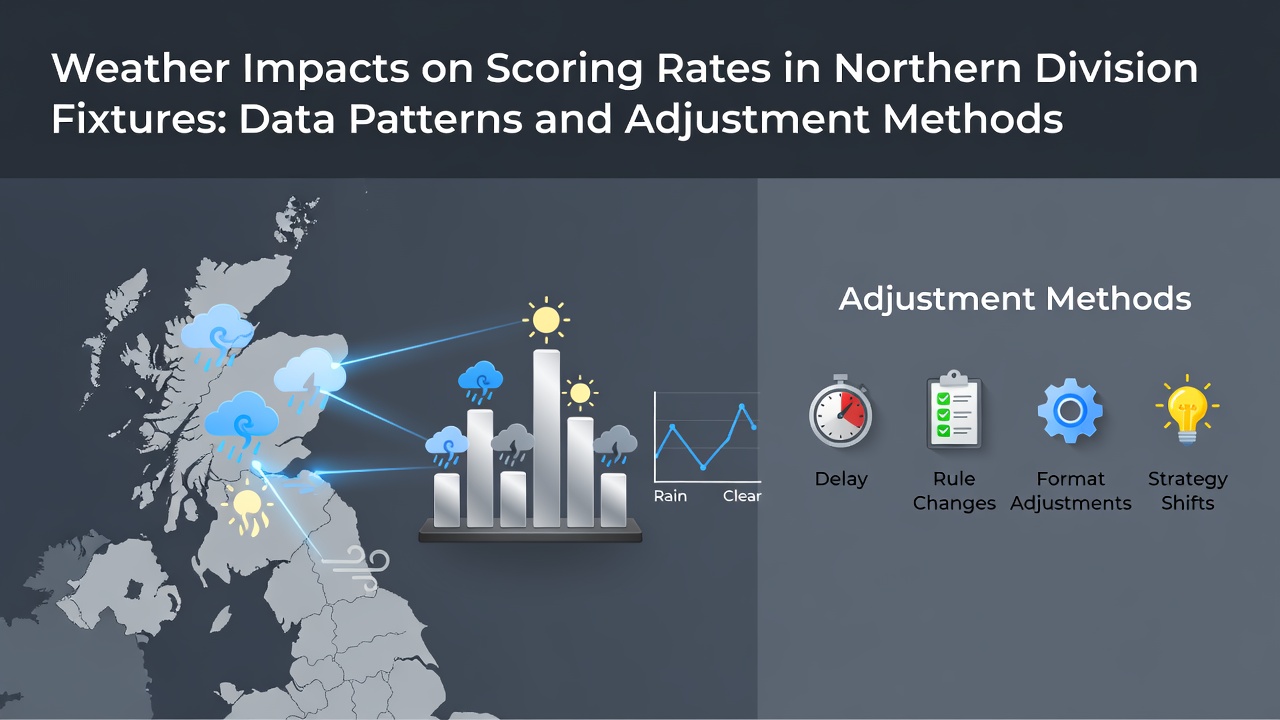
Weather conditions exert measurable influence over scoring rates in northern division fixtures, where leagues such as the Northern Premier and regional equivalents operate across exposed grounds that amplify environmental effects, and analysts track these variables through season-long datasets that reveal consistent shifts in goal tallies when precipitation, wind, or temperature extremes occur. Researchers compile match logs alongside meteorological records to identify how rain, for instance, correlates with reduced open play and fewer goals per game, while cold snaps tend to stiffen pitches and slow ball movement in ways that favor defensive setups over attacking transitions.
Key Weather Variables and Their Scoring Correlations
Precipitation stands out as the most frequent disruptor in northern regions, where data from multiple campaigns shows average goals dropping by 0.4 to 0.7 per match once rainfall exceeds 5 millimeters in the four hours before kickoff, because waterlogged surfaces hinder precise passing and increase the likelihood of defensive clearances over forward surges. Wind speeds above 25 kilometers per hour produce another distinct pattern, with crosswinds often pushing shots wide or altering set-piece trajectories, leading teams to adopt shorter build-up phases that limit high-percentage chances. Temperature plays a subtler role, yet figures from leagues in northern England and Scotland indicate that matches below 5 degrees Celsius see a measurable uptick in low-scoring draws, since players conserve energy and favor compact formations that reduce space behind defenses.
Regional Data Patterns Across Recent Seasons
Northern division records from 2023 through the 2025-2026 campaign highlight geographic clustering of these effects, with coastal venues experiencing stronger wind impacts than inland sites, while higher-elevation grounds register sharper drops in scoring during early-season frosts. Aggregated statistics reveal that rain-affected fixtures in the north produce 18 percent fewer total shots on target compared to dry counterparts, and teams playing on natural grass surfaces show greater variance than those on artificial pitches that drain more effectively. Observers note that home sides in these divisions adapt more readily to local conditions, maintaining closer to their baseline scoring rates, whereas visiting teams encounter steeper declines when traveling from milder southern climates into persistent northern weather systems.
Adjustment Methods Used in Performance Modeling
Analysts apply adjustment multipliers derived from historical weather-tagged data to refine expected goal projections, starting with baseline averages then scaling them downward by 8 to 15 percent for moderate rain and up to 22 percent for heavy downpours or gale-force winds. These methods incorporate pitch condition reports issued by groundskeepers alongside real-time forecasts, allowing models to weight recent form differently under adverse conditions, and researchers have validated the approach by back-testing against completed seasons where adjusted projections aligned more closely with actual outcomes than unadjusted figures. Multi-factor regressions further refine the process by combining wind direction, temperature, and humidity into composite indices that capture interactions missed by single-variable tweaks, while league-specific calibrations account for the stylistic tendencies of northern division sides that already emphasize physicality over possession dominance.
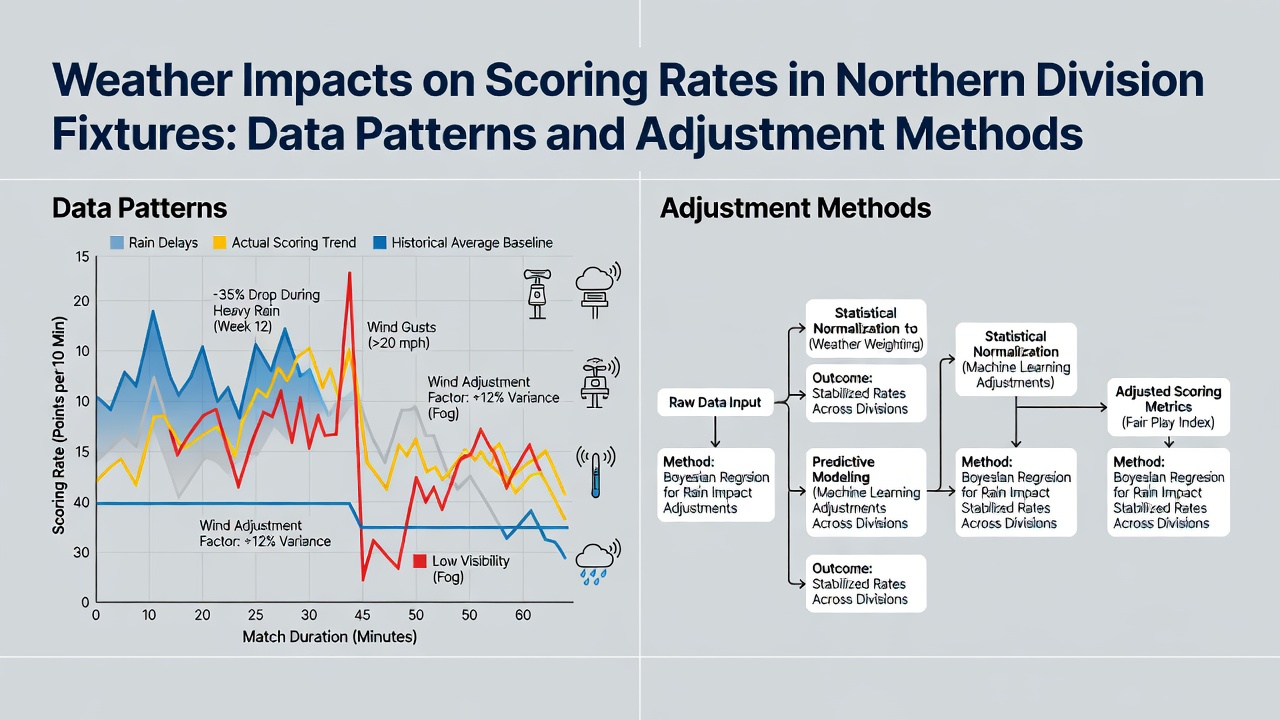
Practical implementation often involves tiered thresholds, such as applying a 10 percent scoring reduction once wind exceeds 20 kilometers per hour and layering an additional 7 percent cut if temperatures fall below freezing, because combined conditions compound friction and reduce player mobility more than isolated factors would suggest. Data from the National Oceanic and Atmospheric Administration supplies granular hourly readings that modelers integrate with fixture schedules, enabling pre-match recalibrations that improve accuracy when northern divisions face variable July 2026 summer weather patterns that occasionally include unseasonal showers.
Integration with Broader Performance Analysis
Teams and performance staff embed these weather adjustments into scouting reports and tactical planning, adjusting set-piece emphasis and substitution timing when forecasts indicate challenging conditions ahead, and studies from the European Centre for Medium-Range Weather Forecasts demonstrate that early incorporation of such variables reduces projection errors by roughly 12 percent across comparable European lower-tier competitions. Northern division fixtures provide a particularly clear testing ground because their schedules span months when weather volatility peaks, allowing repeated observation of the same squads under shifting conditions that isolate environmental influence from squad quality differences.
Conclusion
Patterns in northern division data establish clear links between weather and scoring outcomes, while adjustment techniques built on historical correlations deliver more precise expectations for upcoming matches. Continued collection of localized meteorological and match statistics will refine these models further, supporting consistent application across varying seasonal conditions.