Transfer Windows and Squad Depth Mapping for Accumulator Layers
Written by Ulrich Peters · Jul 24, 2026
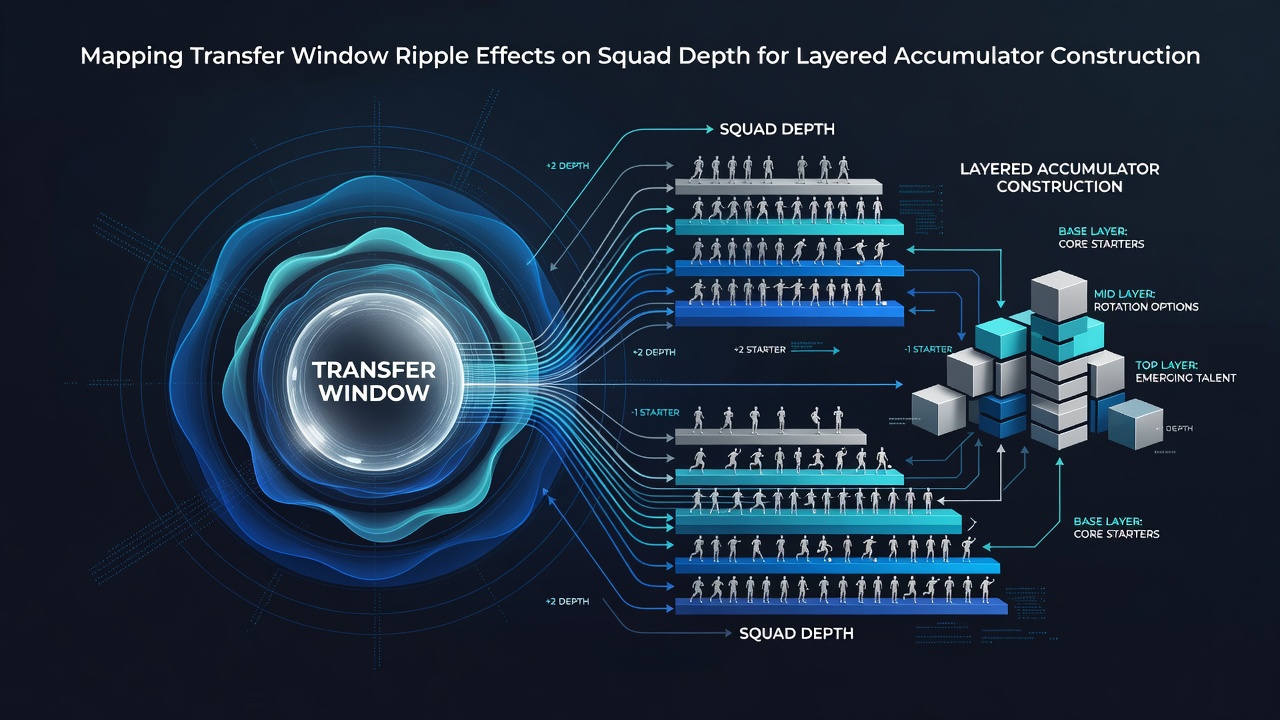
Transfer Windows and Squad Depth Mapping for Accumulator Layers
Transfer windows reshape squad compositions across major leagues each year, and observers track these changes closely because they alter depth profiles that feed into accumulator constructions. Data from the 2025-2026 season shows European clubs completed over 2,800 player movements during the summer window alone, according to industry tracking services. Those shifts create ripple effects that extend from starting elevens down through rotation options and injury cover, which in turn influence how layered accumulators are built around team totals, clean sheets, and player-specific markets.
Core Mechanics of Transfer Ripple Effects
Clubs add players in positions that fill gaps or increase competition, while departures reduce options in specific roles. Researchers at sports analytics firms have mapped these adjustments by comparing pre-window and post-window squad ratings across metrics such as minutes-per-player and positional versatility. One study covering the top five European leagues found that teams gaining two or more established starters in defensive areas improved their clean-sheet probability by an average of 11 percent in the first ten fixtures after the window closed. Accumulator builders incorporate these updated depth charts when selecting legs that depend on consistent defensive structure rather than individual flair.
July 2026 marks the midpoint of the current summer window, and early movements already indicate concentrated activity in midfield and wide areas. League records show Premier League sides have spent approximately £1.2 billion on incoming transfers through mid-July, while outgoing deals have freed up squad slots and wage budgets. These transactions do not occur in isolation; each arrival displaces or complements existing personnel, which alters the reliability of squad rotation during congested fixture periods.
Layering Accumulators Around Updated Depth Profiles
Accumulator construction benefits when bettors segment legs according to how transfers affect starting stability versus bench strength. Teams that reinforce their central defensive partnership often produce more predictable results in matches against mid-table opponents, creating opportunities for match-result and under-2.5-goals combinations. In contrast, clubs that lose experienced goalkeepers or full-backs without adequate replacements show higher variance in both goals conceded and cards awarded, which can be factored into over-card or anytime-goalscorer selections within the same accumulator structure.
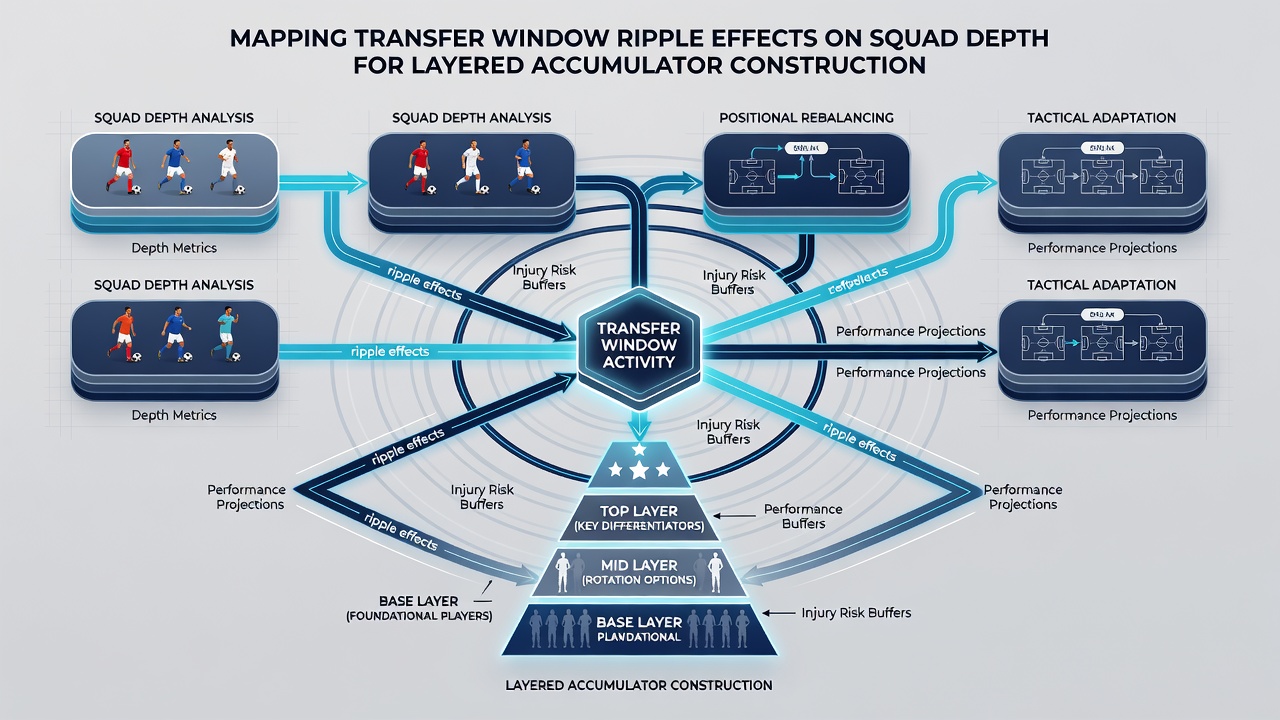
Analysts at research institutions have documented how depth mapping works in practice. A paper published by a Canadian sports economics group examined 180 transfer windows across seven seasons and concluded that squads gaining net positive depth in two or more positions recorded a 14 percent increase in points per game during the subsequent three months. Those findings translate directly into accumulator planning because bettors can weight selections toward sides whose improved depth reduces the likelihood of late collapses or heavy rotations.
Positional Ripple Analysis and Market Selection
Goalkeeper and centre-back additions produce the most measurable effects on clean-sheet and total-goals markets, while forward-line reinforcements influence anytime-scorer and team-total legs. Midfield reinforcements tend to stabilise possession metrics, which correlates with higher corner counts and lower foul rates. Data released by an Australian government sports integrity unit highlights that teams completing targeted defensive upgrades in the January window maintained lower concession rates through the spring schedule compared with clubs that made no changes. Such patterns allow accumulator constructors to layer defensive legs early in a ticket while pairing them with attacking legs from squads that added creative midfielders.
Examples from recent windows illustrate the process. One club that signed two experienced centre-backs and a versatile full-back saw its average goals conceded drop from 1.4 to 0.9 in the opening matches of the new campaign. Accumulator builders responded by including that side in low-scoring match legs while avoiding player-goal markets until attacking options stabilised. Another side that lost its primary striker without signing a direct replacement experienced a measurable dip in shots on target, prompting bettors to shift focus toward opposing clean-sheet legs rather than home-team goal scorers.
Data Integration for Ongoing Adjustments
Real-time depth tracking combines transfer announcements with performance data and fixture density. Organisations such as UEFA's club licensing division require annual squad reports that detail player registrations and contract lengths, providing public datasets that researchers cross-reference with betting-market movements. These sources allow systematic mapping of how each incoming player alters the probability distribution of key outcomes used in accumulator construction. Observers note that windows producing high-volume activity in one position, such as wide forwards, create downstream effects on overlapping full-backs and set-piece takers, which can be modelled across multiple legs of a single ticket.
Conclusion
Transfer-window activity supplies measurable inputs for squad-depth mapping that directly informs layered accumulator construction. By tracking positional reinforcements and departures through official league and regulatory records, analysts build frameworks that connect player movements to outcome probabilities across match-result, goal-line, and player-performance markets. Continued monitoring through July 2026 and beyond will refine these models as additional data becomes available from completed windows and subsequent match schedules.