Injury Timeline Analysis: Enhancing Accumulator Resilience Through Detailed Player Recovery Data
Written by Otto Albrecht · Aug 16, 2026
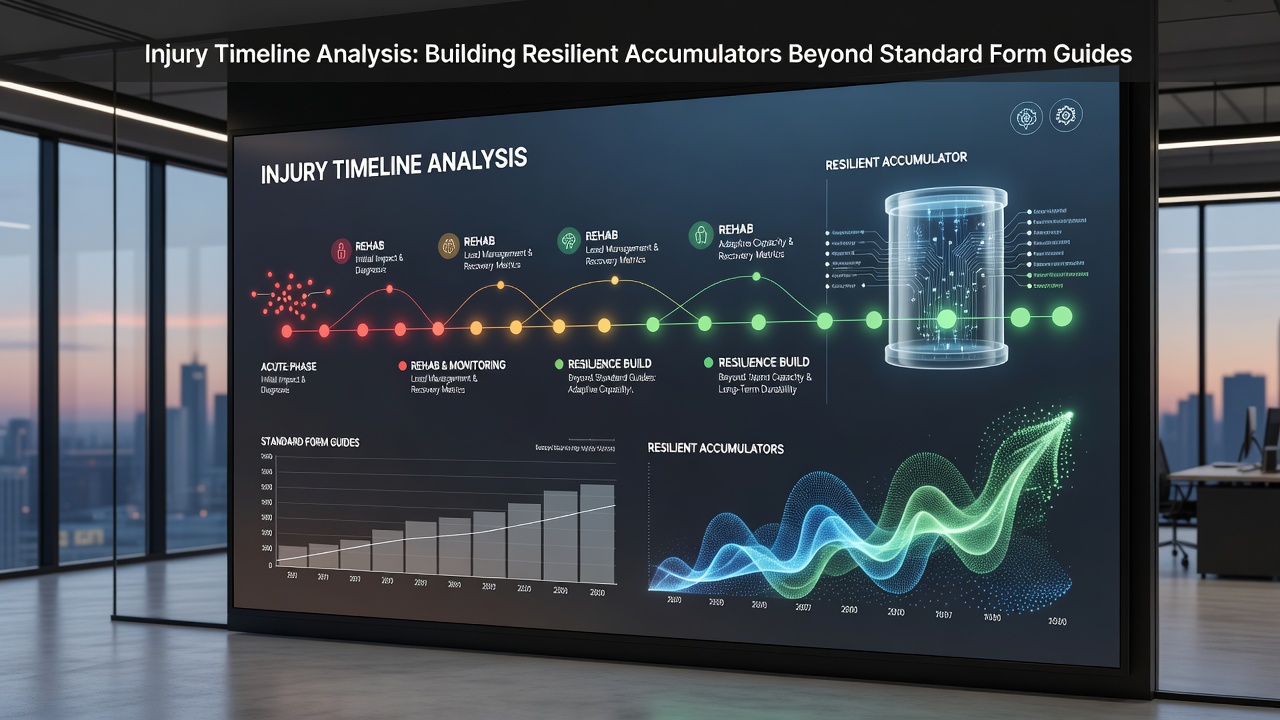
Injury Timeline Analysis: Enhancing Accumulator Resilience Through Detailed Player Recovery Data
Football injury timelines provide structured data on recovery periods that extend well beyond traditional form guides, allowing analysts to map player availability with greater precision across multiple matchweeks. Researchers at institutions like the University of Toronto have tracked how hamstring strains, ankle sprains, and muscle fatigue follow predictable healing curves that influence squad selection and performance metrics in ways standard statistics often overlook. Data from these studies show that a typical Grade 2 hamstring injury requires 4 to 6 weeks for full recovery, yet partial participation can begin earlier when monitored through objective markers such as strength tests and GPS workload data.
Distinguishing Timeline Metrics From Conventional Form Indicators
Form guides rely heavily on recent match results and goal tallies, whereas injury timeline analysis incorporates medical reports, training load percentages, and historical recurrence rates to forecast availability. Observers note that this approach reveals patterns where players returning from long-term absences exhibit reduced sprint output in their first three appearances, a factor that alters expected contributions in team lineups. According to findings published by the Australian Institute of Sport, athletes who miss more than 30 days due to lower-body injuries demonstrate a 22 percent drop in high-intensity running distance upon return, information that supplements basic appearance records used in many accumulators.
Teams in the Premier League and other European leagues publish weekly injury bulletins that feed into these timelines, and analysts cross-reference them with club press conferences to refine projections. What's significant is the way these bulletins align with physiological benchmarks, such as the point at which a defender regains full match fitness after an ACL reconstruction, often cited as nine to twelve months in peer-reviewed literature.
Applying Timeline Data Across Accumulator Construction
Accumulators that incorporate injury timelines adjust selections by weighting player durability alongside tactical fit and opponent strength. A midfielder listed as doubtful with a minor knock might still feature in shorter fixtures, yet data indicates elevated risk of re-injury when matches occur within five days of each other. Studies from the FIFA Medical Centre of Excellence have documented that fixture congestion during the winter period amplifies these risks, prompting adjustments in multi-leg selections that account for cumulative fatigue rather than isolated form streaks.
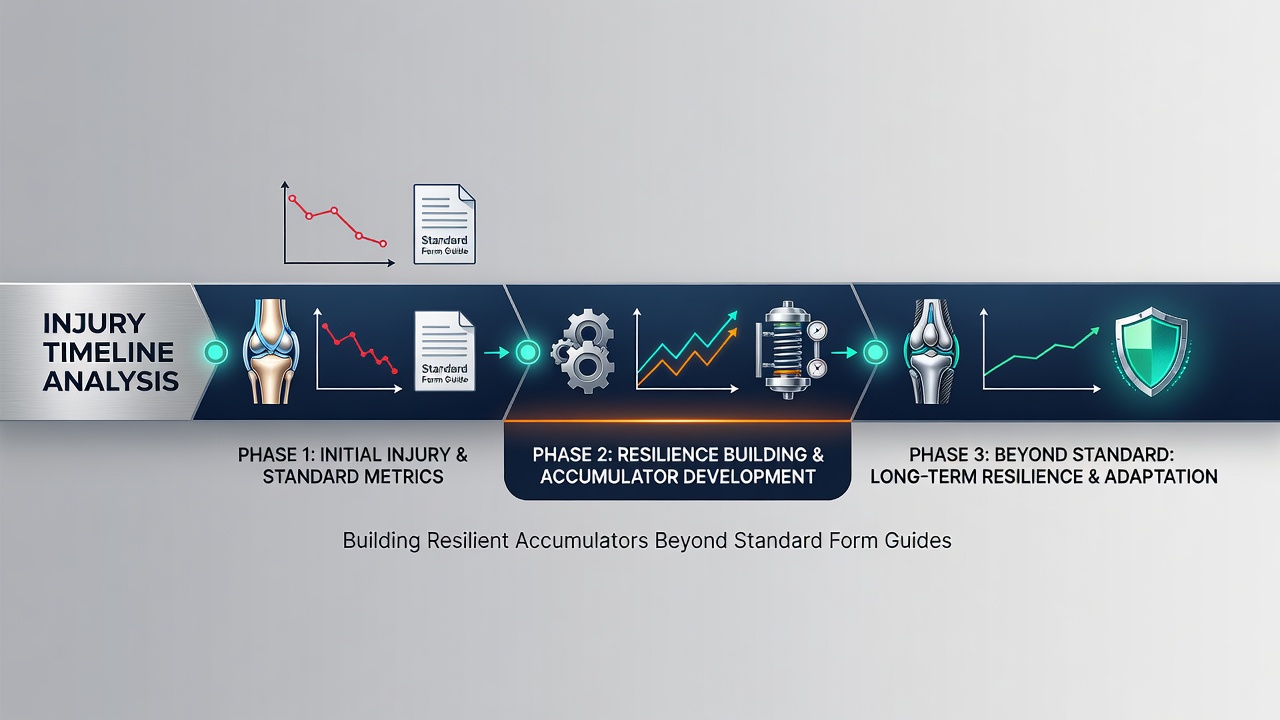
One study revealed that forwards returning from quadriceps issues maintain lower shot conversion rates for up to four matches, a detail that refines goal-scorer selections in accumulators. Those who've examined Bundesliga and Serie A datasets find similar trends, where recovery timelines correlate with measurable declines in expected goals and assists during the initial integration phase. August 2026 pre-season schedules already highlight several high-profile cases, including midfielders managing adductor timelines that stretch into the opening weeks of the campaign, information that shapes early-season accumulator structures before full match data accumulates.
Integrating External Data Sources for Accuracy
Industry reports from organizations such as the Aspetar Orthopaedic and Sports Medicine Hospital supply granular recovery statistics that complement league bulletins. These sources track variables including days since last match, training intensity ratios, and prior injury history to produce probability estimates for participation. Academic papers from Canadian universities have further quantified how specific injury types affect positional roles, showing that central defenders require longer adaptation periods after knee procedures compared with wide attackers.
External links to performance databases allow cross-validation of timeline projections against actual minutes played, reducing reliance on anecdotal reports. Data indicates that clubs adhering to evidence-based return-to-play protocols achieve higher consistency in player availability, a factor that stabilizes accumulator outcomes over extended periods.
Monitoring Timeline Shifts During Active Seasons
Live updates to injury timelines occur through club announcements and medical assessments, requiring constant recalibration of accumulator selections. Experts have observed that midweek cup ties often accelerate or delay recoveries depending on squad depth, with teams managing multiple injuries simultaneously showing compressed timelines for key personnel. Research indicates that monitoring load management strategies, such as rotation policies enforced by coaching staff, provides additional context that static form guides cannot capture.
August 2026 fixtures illustrate this dynamic, as several squads navigate overlapping international breaks and domestic schedules that test recovery windows. Those who integrate these variables report more stable projections across weekend and midweek legs alike.
Conclusion
Injury timeline analysis supplies measurable inputs that extend accumulator frameworks beyond surface-level form indicators. By combining medical benchmarks, workload data, and positional recovery curves drawn from established research sources, analysts construct selections that reflect documented patterns in player availability and performance. Continued refinement of these methods relies on ongoing data from sports medicine institutions and league reporting systems that track outcomes across multiple seasons.