Card Distribution Trends Reveal Patterns in Referee Decision-Making Across Soccer Leagues
Written by Otto Albrecht · Aug 21, 2026
Card Distribution Trends Reveal Patterns in Referee Decision-Making Across Soccer Leagues
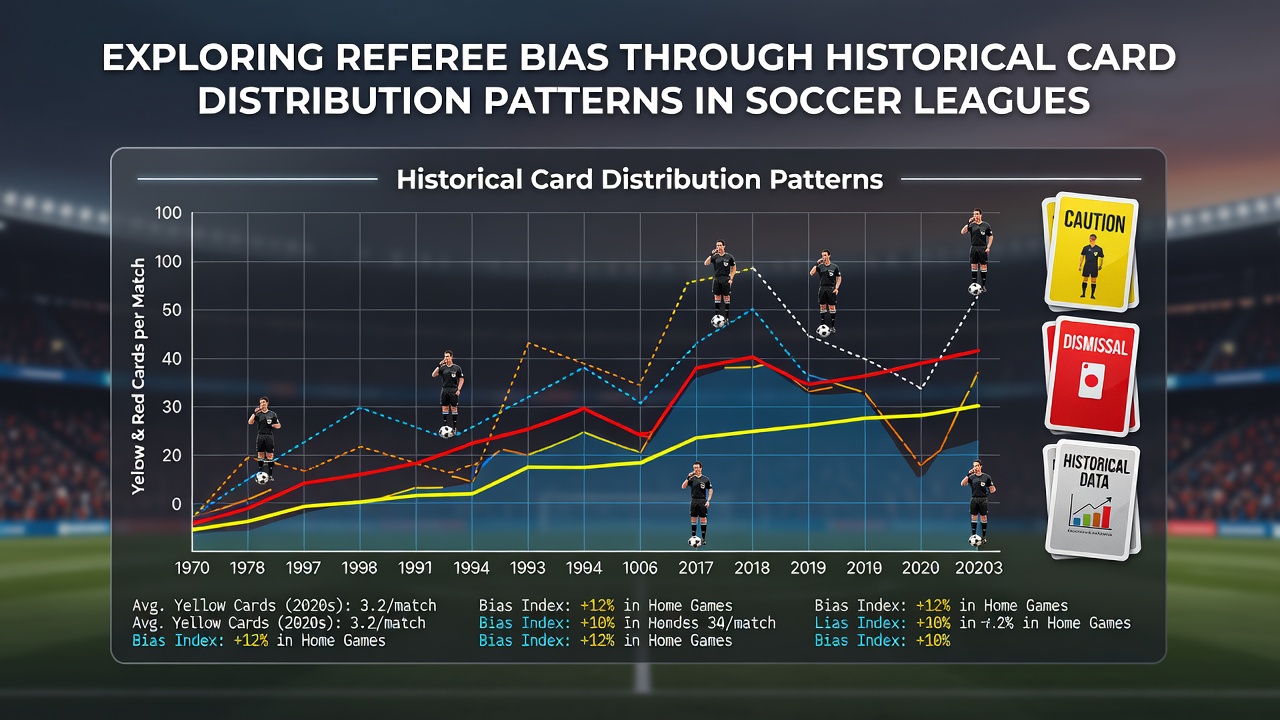
Analysts have tracked card distribution data across Europe's top divisions for more than two decades, and the numbers show consistent variations that researchers continue to examine for signs of systematic differences in how officials apply rules. Leagues such as the Premier League, La Liga, Serie A, and Bundesliga maintain public records of yellow and red cards issued each season, which allows statisticians to compare averages per match, per team, and even per referee over extended periods.
Long-Term Data Sets Highlight Measurable Differences
Records compiled by league authorities indicate that average cards per game have fluctuated between 3.8 and 5.2 across the major competitions since the 2000-2001 campaign, with Serie A often recording the higher end of that range while the Bundesliga tends toward the lower end. Researchers at several European universities have cross-referenced these figures with match context variables including scoreline, time remaining, and player position to isolate whether certain referee groups issue cards at statistically different rates under identical conditions.
And the patterns do not stop at national borders. Data aggregated by the UEFA technical reports shows that referees officiating in the Champions League issue fewer cards on average than they do in their domestic leagues, a discrepancy that holds across multiple seasons and nationalities.
Examining Home and Away Disparities
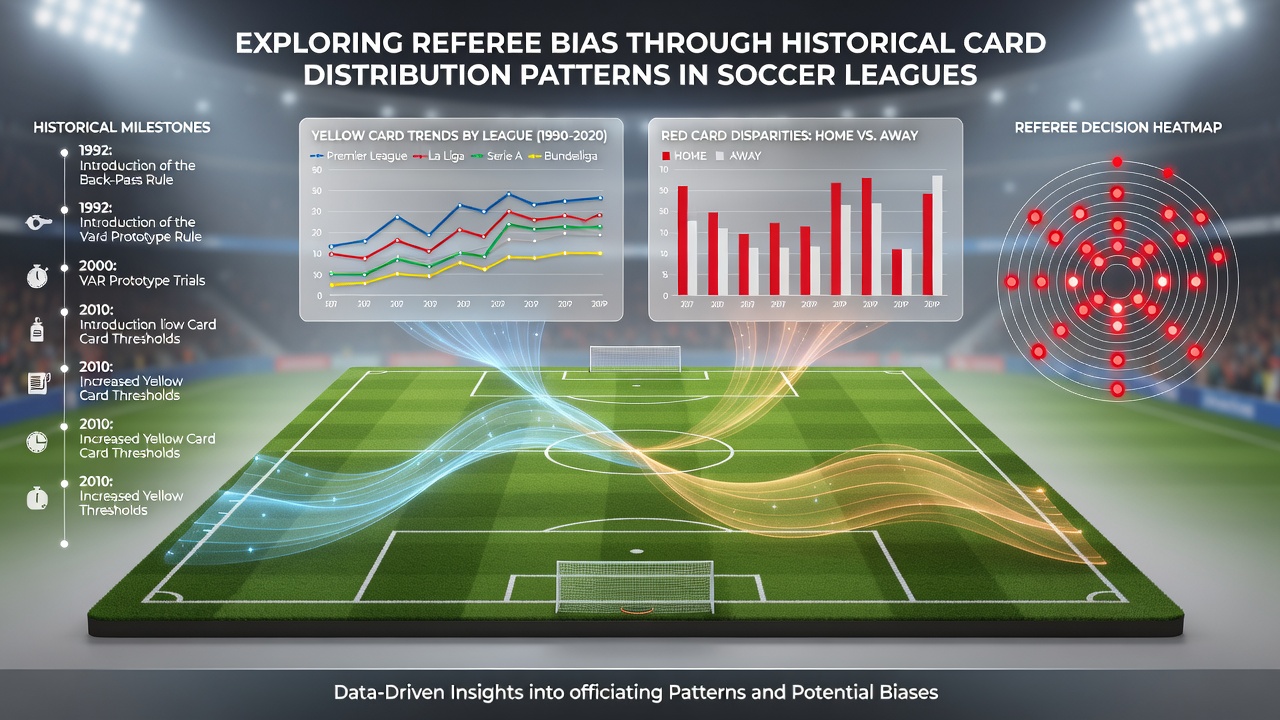
Historical tables reveal that away teams receive roughly 0.4 more yellow cards per match than home sides in the same league, a margin that has remained stable in aggregate statistics from 2010 through the 2025-2026 season. Observers note that this gap narrows slightly in matches where attendance exceeds 50,000 spectators, yet widens again in fixtures played behind closed doors, according to figures released by the German Football League after the 2020-2021 period.
Referee-Specific Trends Over Multiple Seasons
Individual official records demonstrate that some referees maintain card rates that deviate from the league mean by more than one standard deviation across five or more campaigns. League administrators publish these profiles each summer, and clubs review them when preparing match strategies for the August kickoff. In the 2025-2026 season, for instance, three officials in La Liga recorded yellow-card averages above 5.8 per game, while two others stayed below 3.9, differences that persist even after adjustments for team style and fixture difficulty.
Contextual Factors and Rule Changes
Adjustments to the Laws of the Game, such as the introduction of the sin-bin trial in lower divisions and stricter handball interpretations, have produced measurable shifts in card counts. The International Football Association Board documented a temporary spike in yellow cards during the 2022-2023 season following the updated handball guidance, with the increase most pronounced in matches involving set-piece situations. Subsequent clarifications issued in 2024 brought the averages back toward pre-2022 levels in most competitions.
Researchers have also examined whether player nationality or skin tone correlates with card rates, and several peer-reviewed studies published in sports science journals report small but statistically significant differences in certain leagues. These findings remain under active debate, and governing bodies have commissioned additional reviews that incorporate video evidence and referee feedback to understand the underlying causes.
Technology and Its Influence on Consistency
Video assistant referee systems, now standard in the Premier League, La Liga, Serie A, Bundesliga, and Ligue 1, have altered the distribution of red cards more than yellow cards. Data from the 2023-2024 through 2025-2026 campaigns shows a reduction in direct red cards issued on the field that are later overturned, while the overall number of yellow cards has stayed relatively stable. League reports indicate that VAR interventions occur in approximately 7 percent of matches, with the majority involving potential red-card situations rather than routine cautions.
Training programs run by confederations such as CONCACAF and the Asian Football Confederation now incorporate historical card data into referee development modules, aiming to reduce variation between officials. Early results from these programs suggest modest convergence in card rates among newer referees, although established officials show slower changes in their established patterns.
Conclusion
Comprehensive review of card distribution records provides one quantitative lens through which observers can study referee behavior across competitions and eras. The data sets continue to grow each season, and ongoing academic and league-led analyses refine the understanding of which variables most strongly influence card issuance. As technology and rule interpretations evolve, the historical patterns serve as a baseline against which future shifts can be measured.