Assessing Travel Fatigue Influences on Match Pricing Across Continental Schedules
Written by Mara Keller · Jun 9, 2026
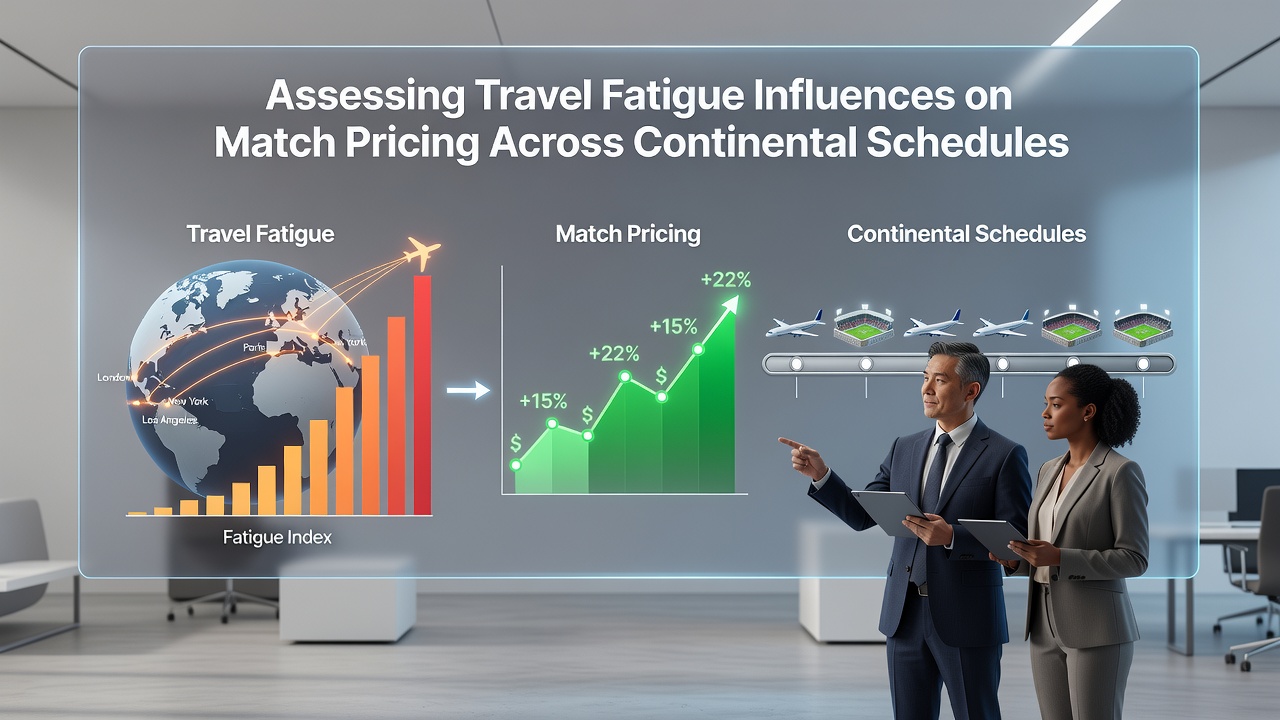
Assessing Travel Fatigue Influences on Match Pricing Across Continental Schedules
Travel across multiple time zones creates measurable disruptions in athlete recovery cycles, and these patterns show up directly in how betting markets adjust match pricing for fixtures that span continents. Observers note that teams crossing more than five time zones often exhibit slower reaction times and reduced high-intensity running distances in the first 48 hours after arrival, according to performance tracking data compiled by major sports analytics platforms. Such adjustments lead bookmakers to recalibrate odds, particularly in competitions like the UEFA Champions League group stages or intercontinental club tournaments where long-haul travel occurs regularly. Researchers have tracked heart-rate variability and sleep metrics in elite athletes during these journeys, finding consistent drops in physical output that correlate with higher concession rates in early match periods. Markets respond by shifting lines on total goals, Asian handicaps, and player-specific props, reflecting the statistical edge held by better-rested opponents. Data collected during the 2024-2025 European season revealed that squads traveling from South America to Europe for midweek fixtures saw their implied probabilities adjusted downward by an average of 4 to 7 percentage points in opening markets.Key Variables in Continental Travel Impact
Flight duration, departure timing, and arrival conditions combine to influence recovery windows before kickoff. Eastward travel tends to compress circadian rhythms more severely than westward journeys, because athletes lose sleep hours rather than gaining them. Studies conducted by the Australian Institute of Sport have quantified these effects across multiple codes, showing elevated injury risk in the 72-hour window following arrival when eastward crossings exceed eight hours. Match schedulers in continental competitions attempt to mitigate these factors through designated rest days, yet fixture congestion often compresses those buffers. When teams face back-to-back long-haul legs within ten days, performance datasets indicate measurable declines in pass completion rates and defensive organization. Pricing algorithms used by major operators incorporate these historical trends alongside real-time monitoring of training loads released by clubs, allowing markets to price in fatigue before public information fully circulates.Market Adjustments Observed in Recent Seasons
Bookmakers refine opening lines using proprietary models that weigh travel distance against recent form. In June 2026, as clubs prepared for expanded intercontinental tournaments tied to the FIFA World Cup calendar, several operators widened their travel-fatigue coefficients in response to updated performance benchmarks released by European sports science consortia. These revisions appeared most prominently in matches involving South American and Asian participants traveling to European venues, where home sides received stronger pricing favoritism than historical averages alone would predict. One notable pattern emerges when teams arrive less than 72 hours before kickoff. Markets have shown over-correction in total goals lines during these scenarios, because aggregate data sometimes underestimates individual player resilience. Analysts cross-reference GPS data from training sessions with historical concession rates to refine those estimates, producing tighter spreads that reflect both fatigue and tactical adjustments by coaching staff.